Get Free Consultation!
We are ready to answer right now! Sign up for a free consultation.
I consent to the processing of personal data and agree with the user agreement and privacy policy

We are ready to answer right now! Sign up for a free consultation.
I consent to the processing of personal data and agree with the user agreement and privacy policy
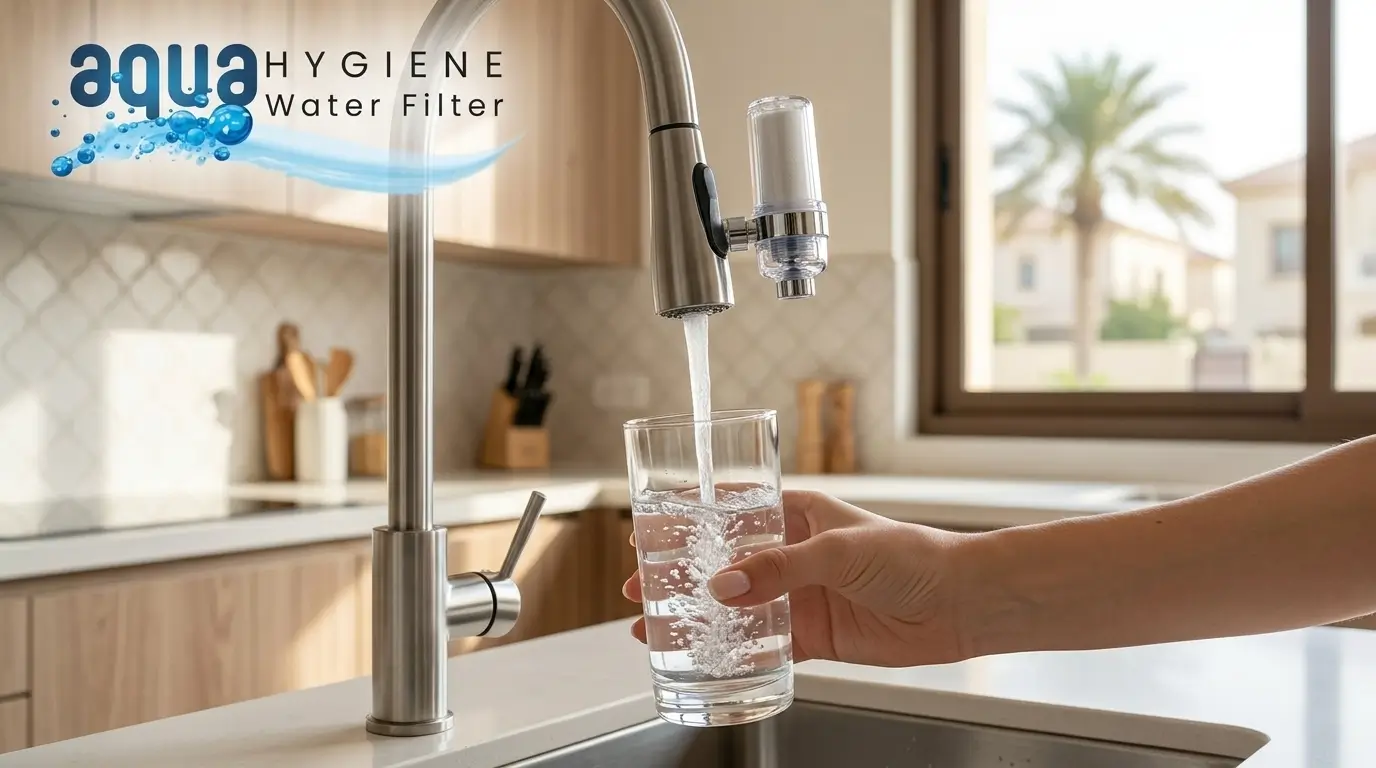
If you live in Dubai, you've probably asked yourself this at least once while filling a glass at the kitchen sink. The short answer is yes, DEWA-treated water meets World Health Organization standards before it ever reaches your building. But there's more to the story once that water leaves the treatment plant and travels through your pipes.
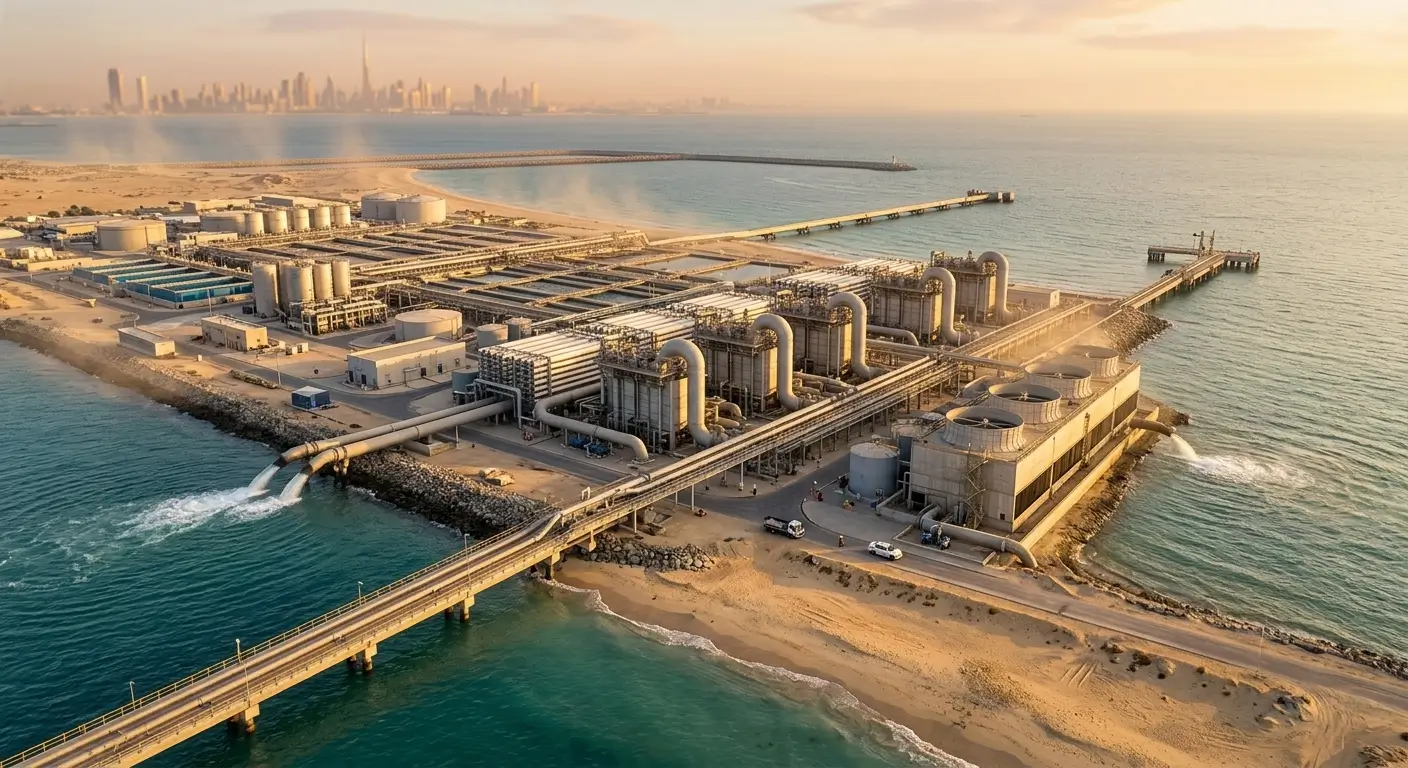
Dubai doesn't rely on rivers or underground aquifers the way many cities do. Almost all the drinking water in the Emirate is obtained from seawater which is drawn from the Arabian Gulf and treated at huge scale desalination plants, operated by the Dubai Electricity and Water Authority. Because the process starts with seawater rather than groundwater, soil contamination isn't really a concern here. Most of the risk that does exist shows up later, after the water leaves DEWA's network.
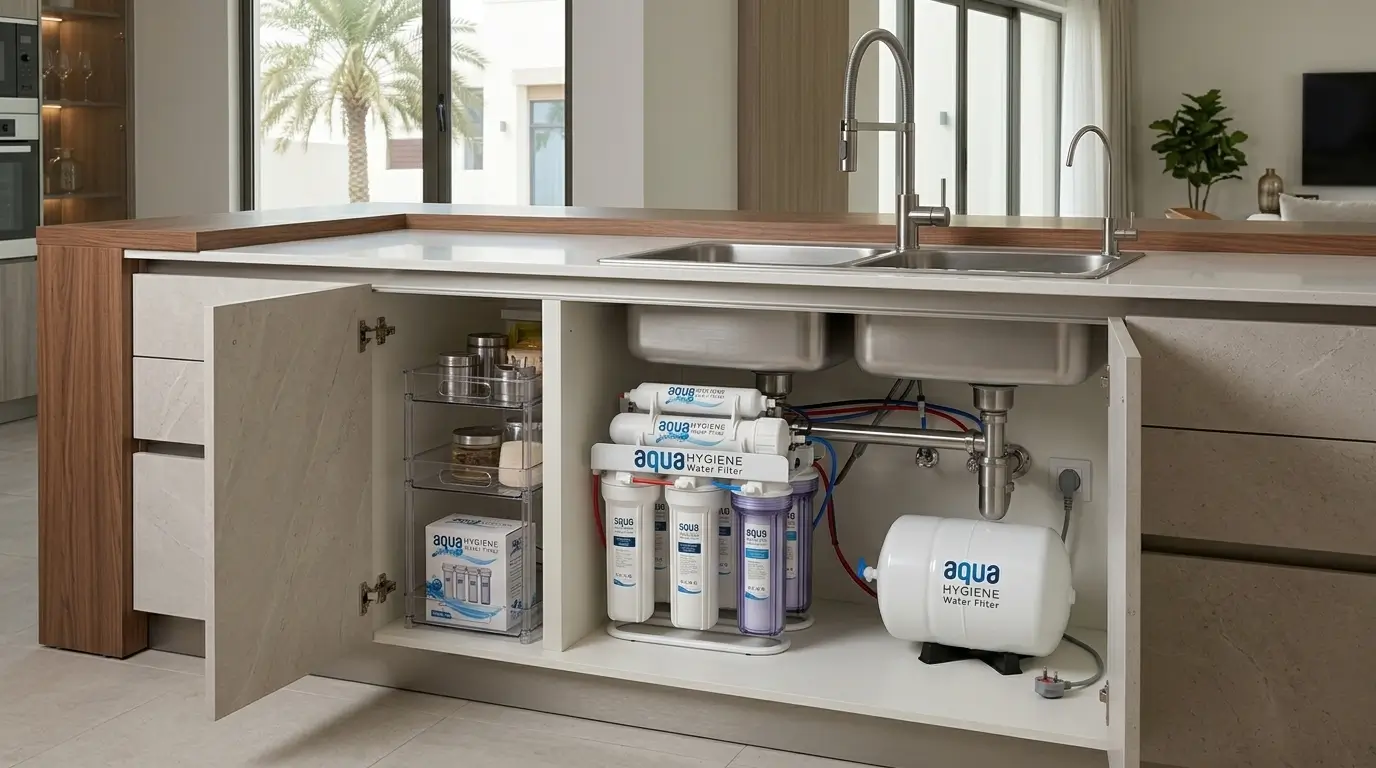
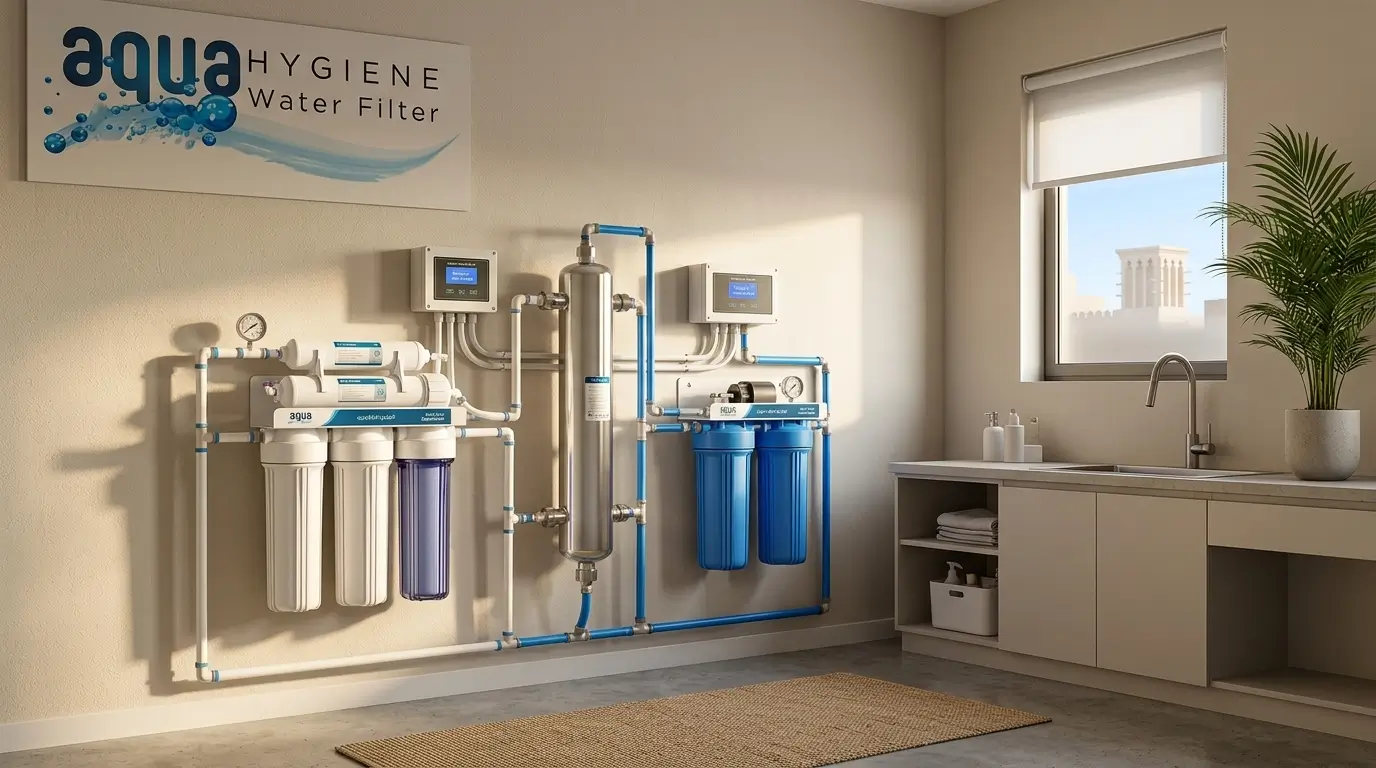
DEWA also regularly tests water, performing thousands of samples per month throughout the water distribution system, including at the treatment plants and at individual taps. A reverse osmosis system provides total control over the quality of water regardless of what is happening upstream, if you want a better understanding of what's actually coming out of your tap.
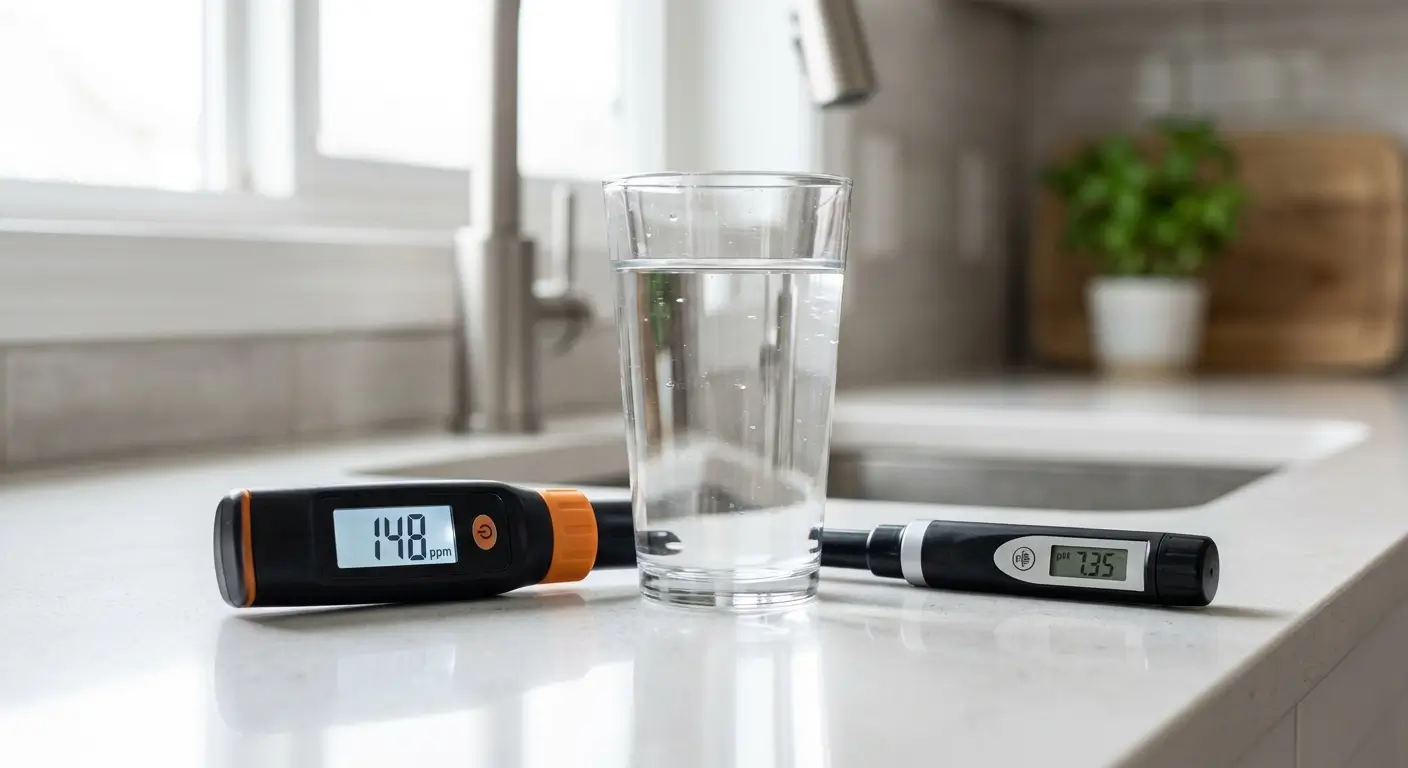
For anyone who likes specifics, here's roughly where Dubai's tap water sits on the key measures:
None of these numbers are alarming on their own. Moderately hard water is common in plenty of places, and chlorine at these levels is standard practice for keeping water safe during distribution.
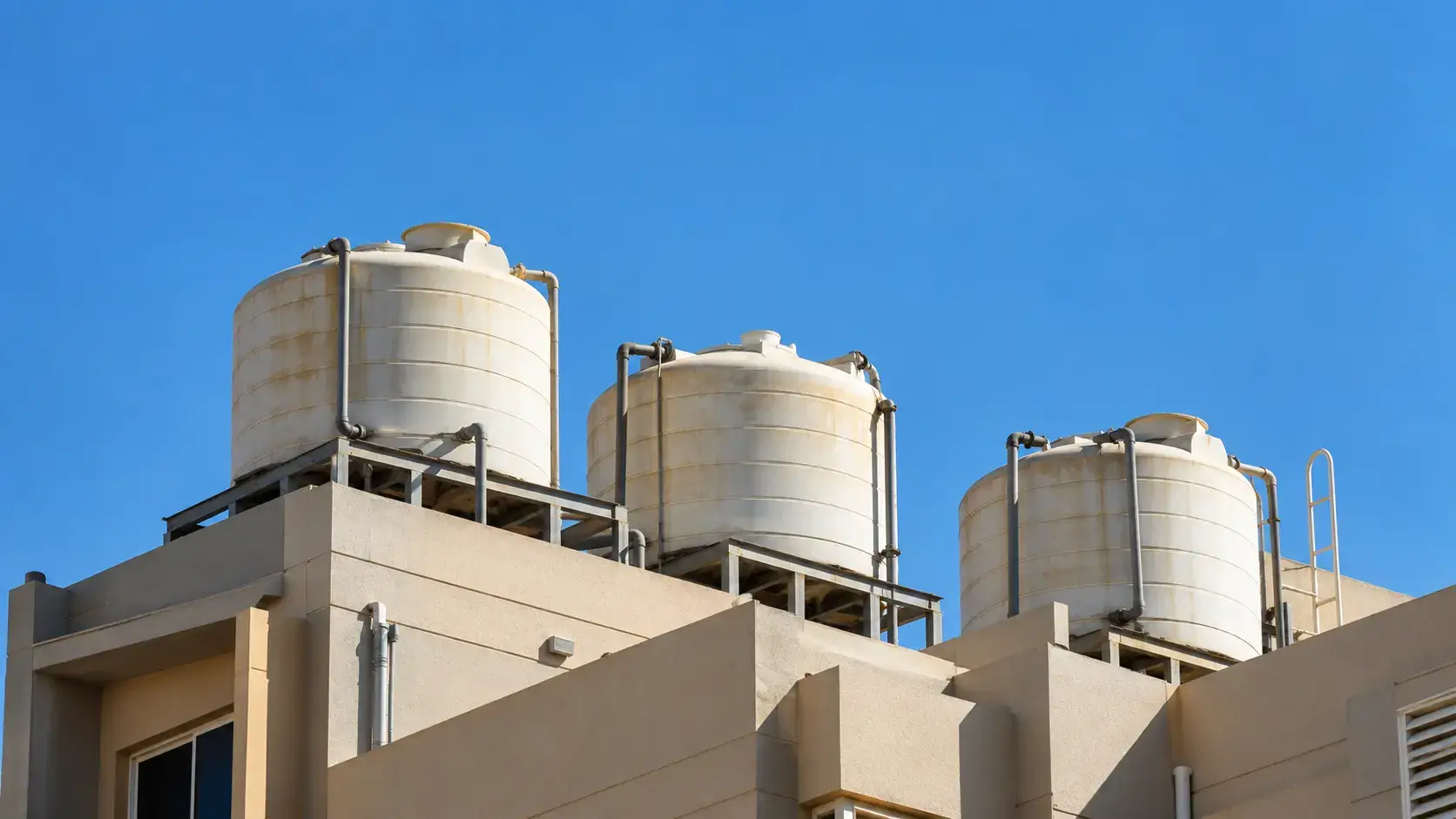
Two things usually drive this, taste and what happens between the treatment plant and your glass.
Desalinated water tends to taste flatter than water with a natural mineral content, since so much has been stripped out during processing. When many people relocate to Dubai from a region that has naturally mineralized water, they notice this immediately.
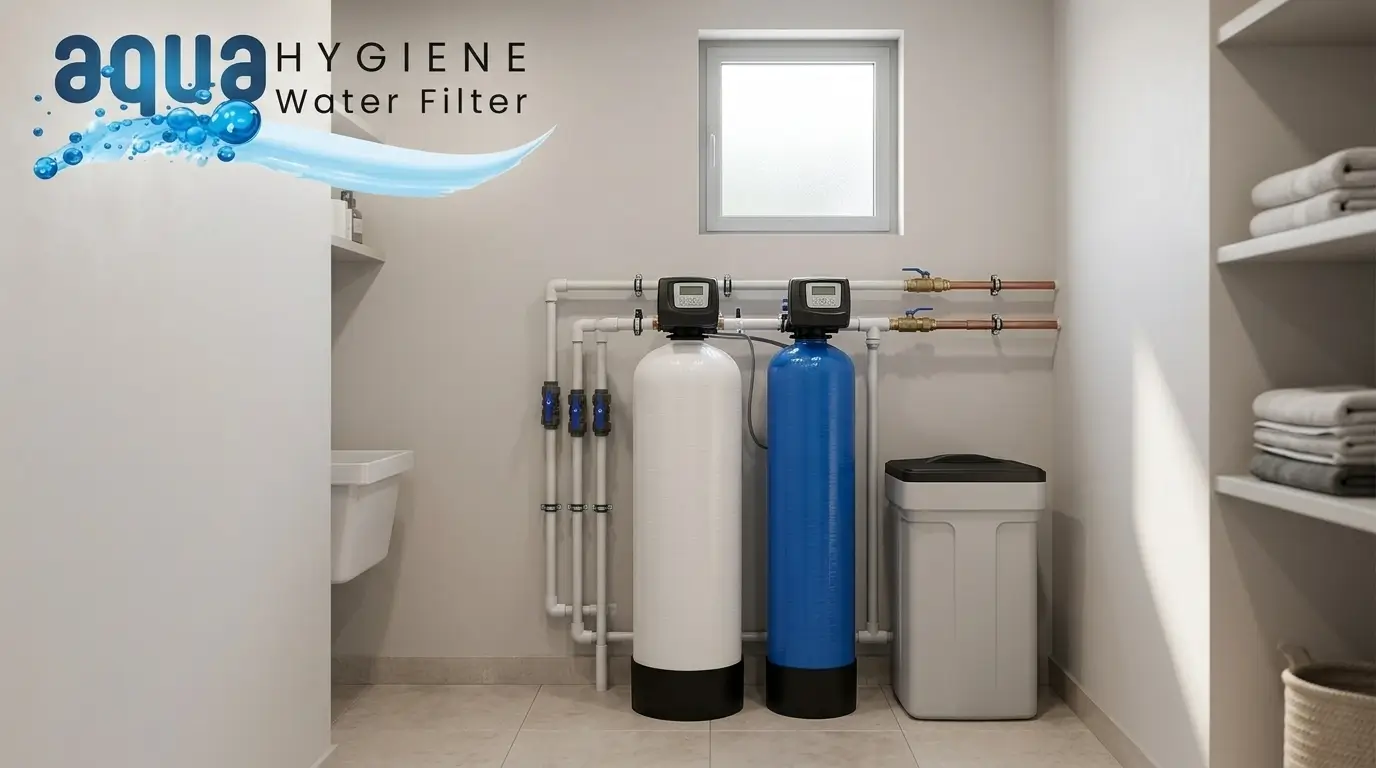
The bigger factor is what happens after DEWA's network ends. Water quality can be influenced by storage tanks on top of buildings, old internal pipework and the irregularity of tank cleaning schedules even if the water that has been sent to the building was originally of high quality. This is where a whole house filtration system comes in handy, as it filters water at the point of entry into your home.
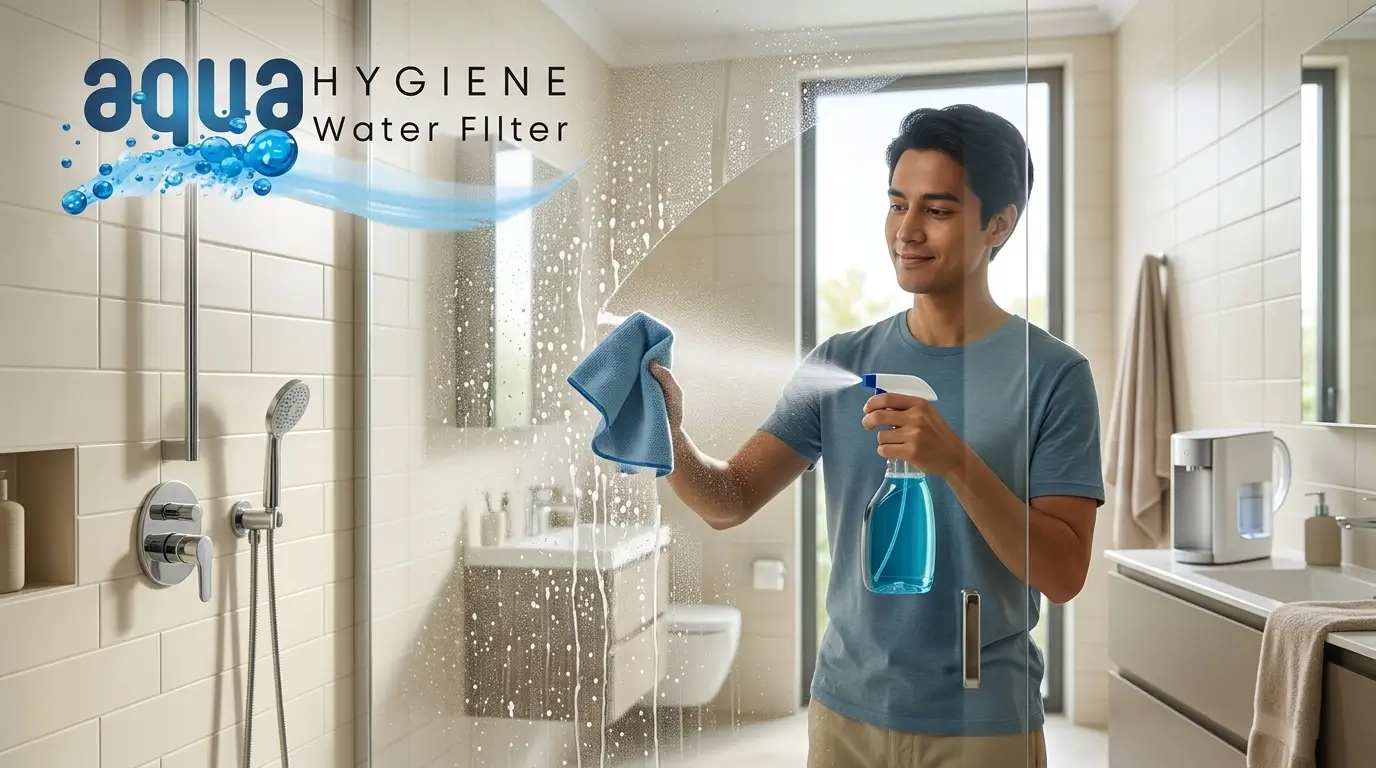
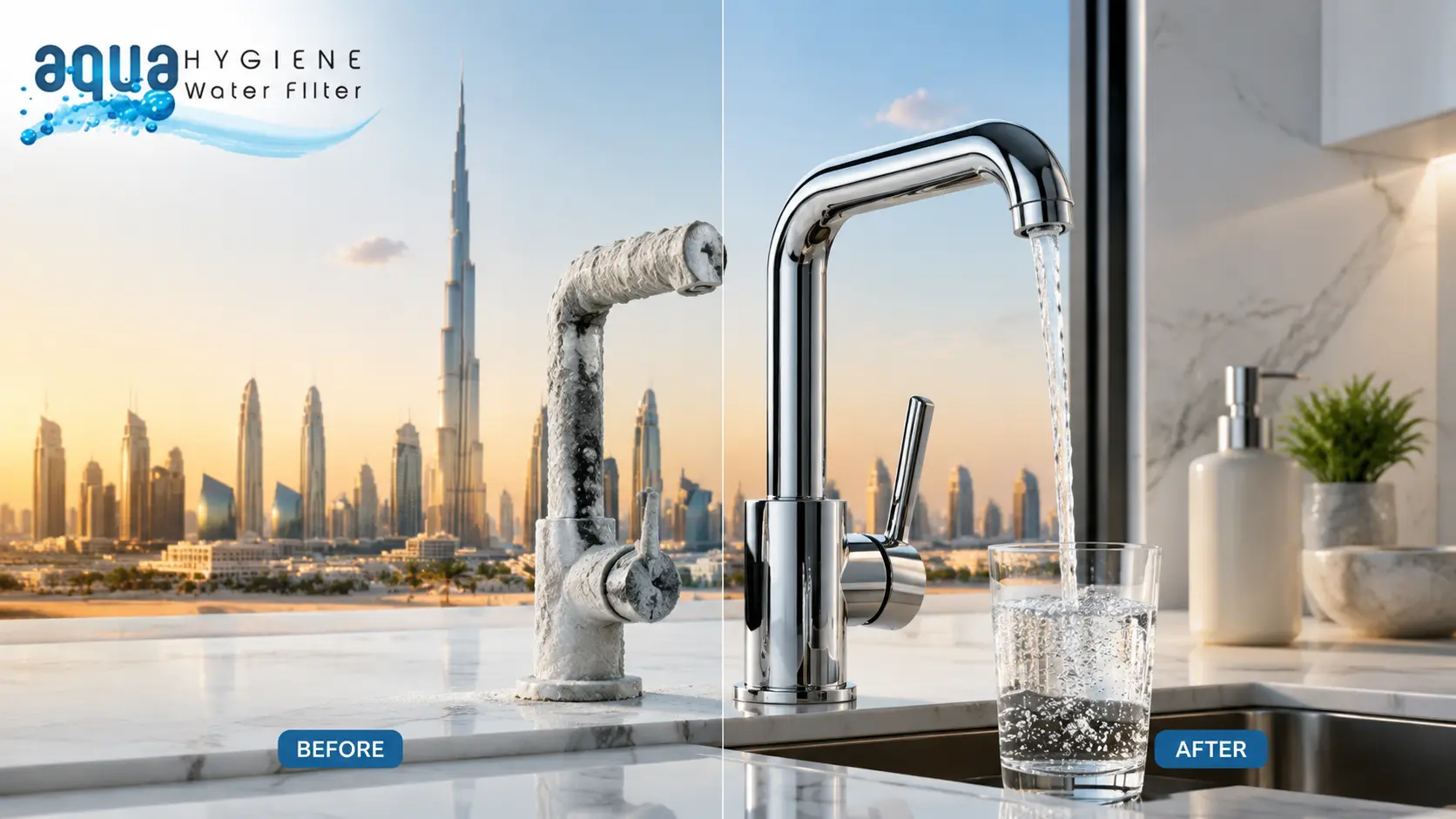
Hardness is another common trigger. Moderately hard water can leave mineral deposits on fixtures, shower doors and appliances over time, and this is usually what pushes people toward a water softener rather than a straight filtration system.
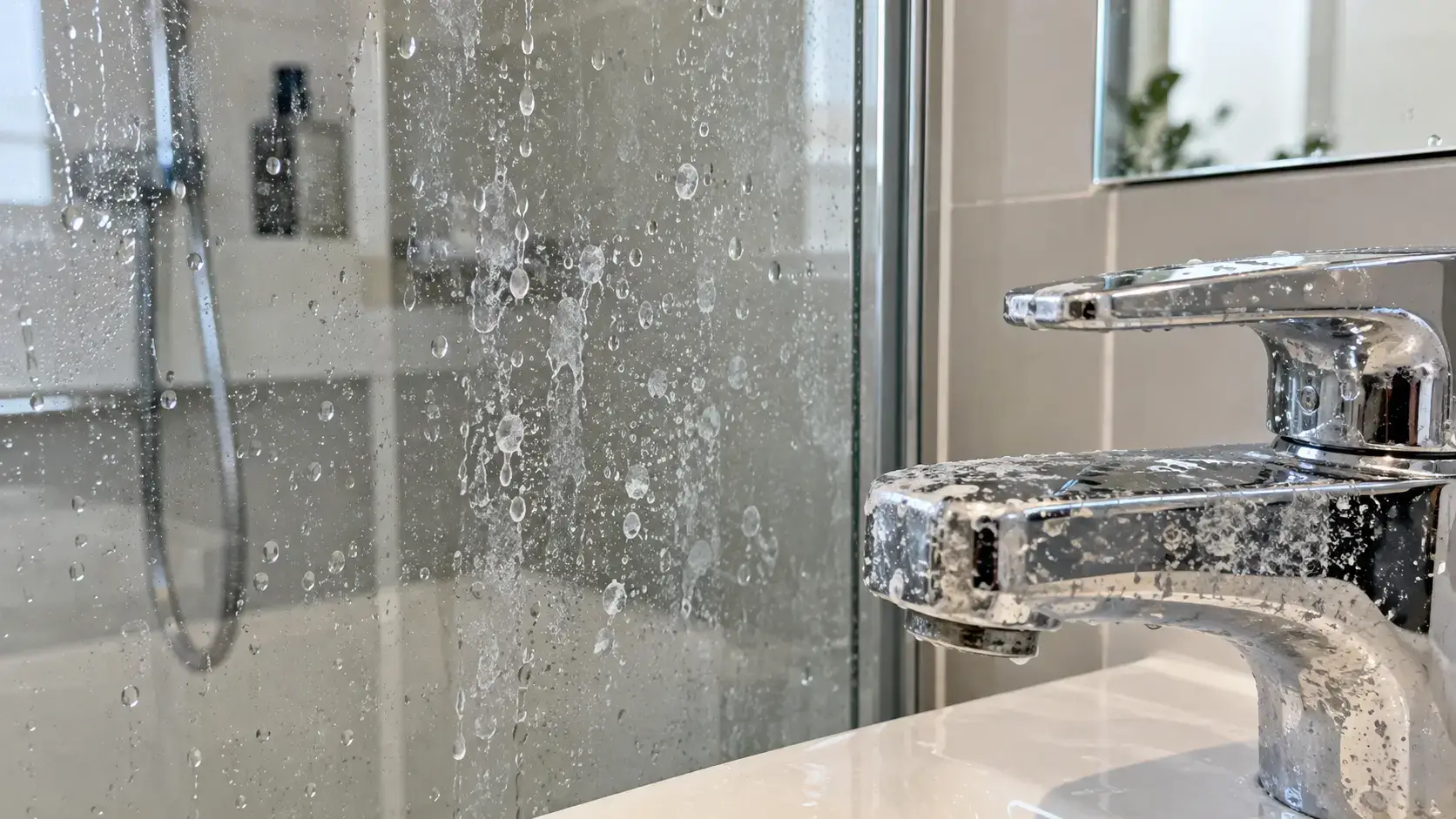
Watch for these, regardless of what DEWA's own testing shows:
If you notice any of these, a good indication that your building's storage tank should be checked; this is a much more frequent occurrence than at the municipal level.
Yes, this is completely fine.
It meets safety standards, but many parents choose filtered or purified water for infant formula and feeding as an extra precaution, largely due to sodium and mineral content rather than any specific safety risk.
Some residents notice this, largely due to water hardness. A water softener or shower filter can help if this is a recurring issue for you.
Not necessarily. Properly filtered tap water gives you consistent quality without the ongoing cost and plastic waste of buying bottles.
Dubai's tap water is genuinely safe by the time it leaves DEWA's treatment plants. What happens between there and your glass is where things get more variable, and that's exactly where a home filtration setup earns its keep. If you're not sure whether your building's water needs any extra attention, get in touch with Aqua Hygiene and we'll help you figure out what actually makes sense for your home.