Get Free Consultation!
We are ready to answer right now! Sign up for a free consultation.
I consent to the processing of personal data and agree with the user agreement and privacy policy

We are ready to answer right now! Sign up for a free consultation.
I consent to the processing of personal data and agree with the user agreement and privacy policy
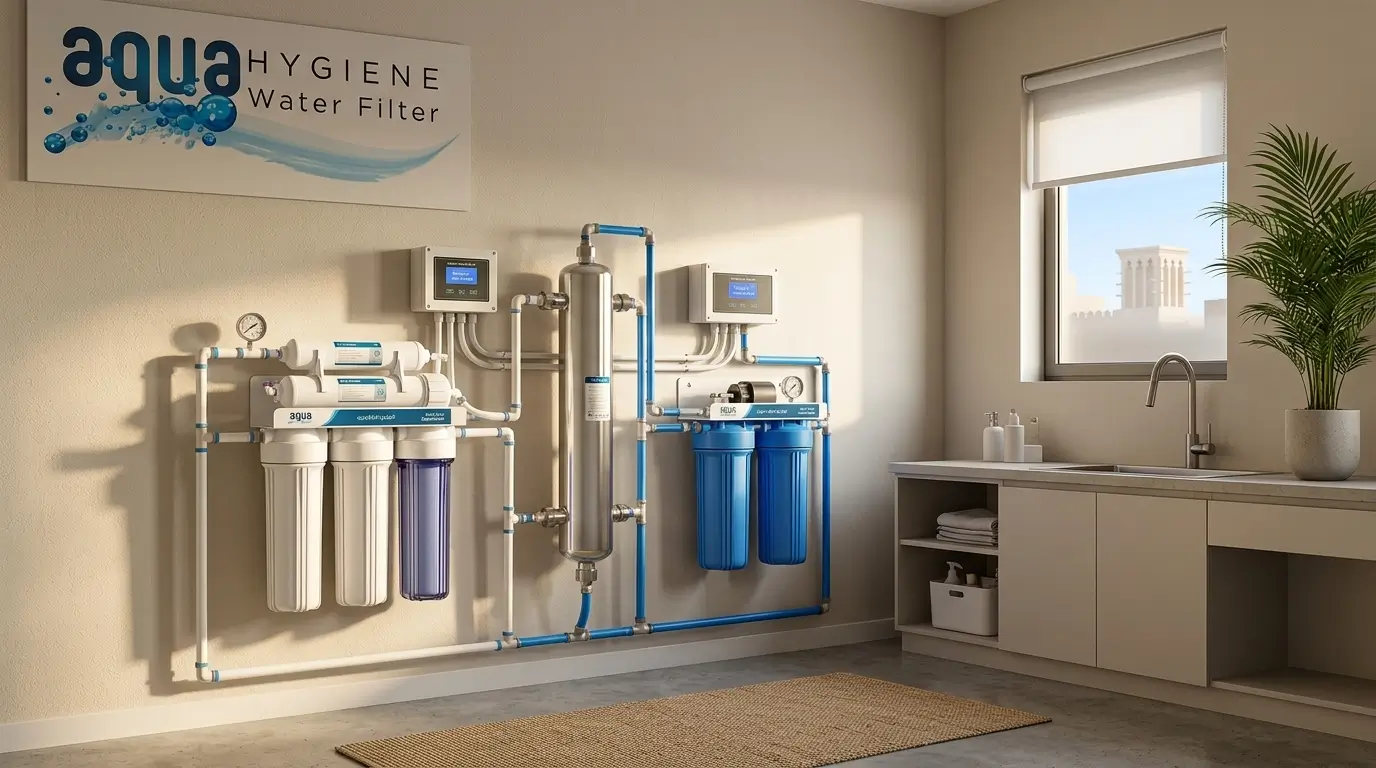
Clean water matters for your health, but what comes out of the tap doesn't always start out that way. City water and well water both carry their own mix of sediment, chlorine, minerals or other substances by the time they reach your home. A whole house water filtration system treats all of it at once, right at the point where water enters your property, rather than leaving you to filter one tap at a time.
If hardness or scale is your main headache rather than taste or sediment, a water softener tackles that specific problem and often works alongside a whole house filter rather than instead of one. This guide covers what these systems actually do, what they can remove, and how to work out which setup fits your home.
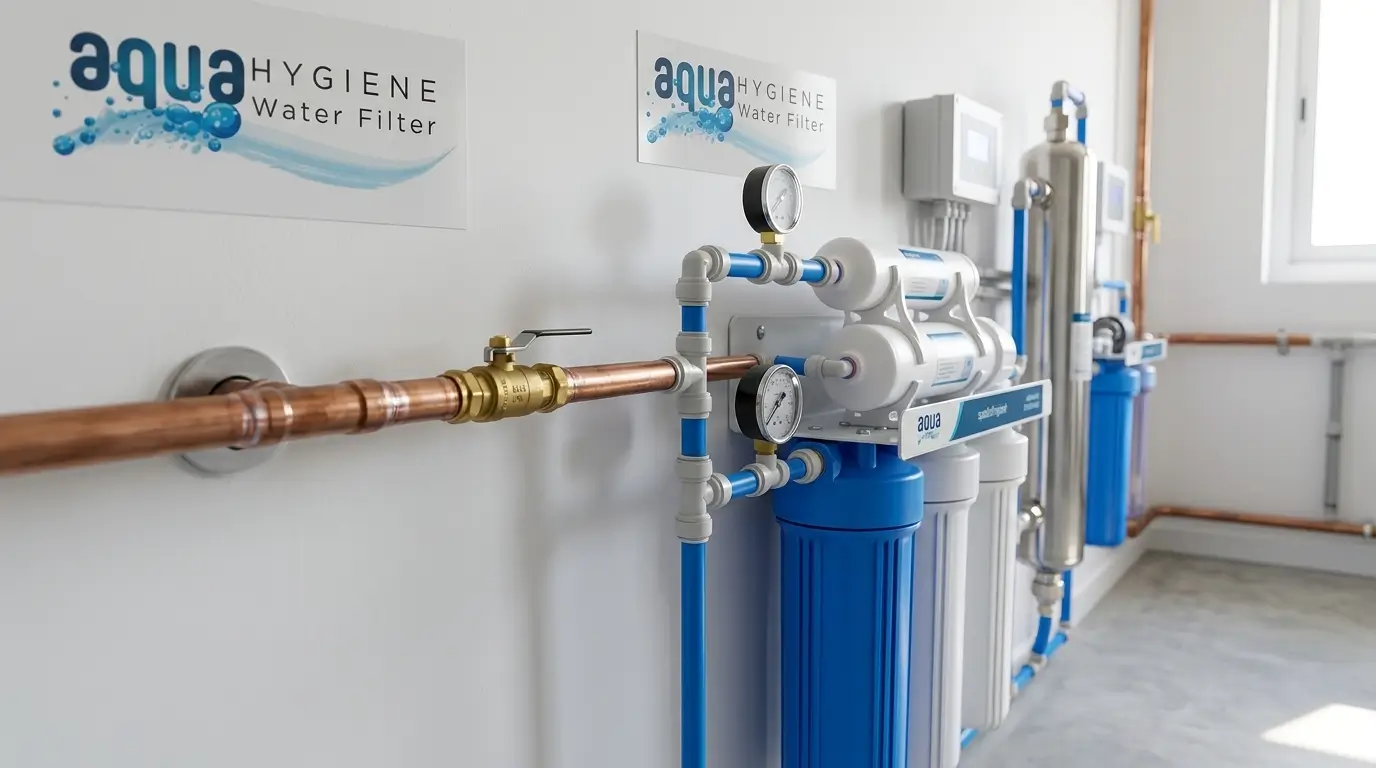
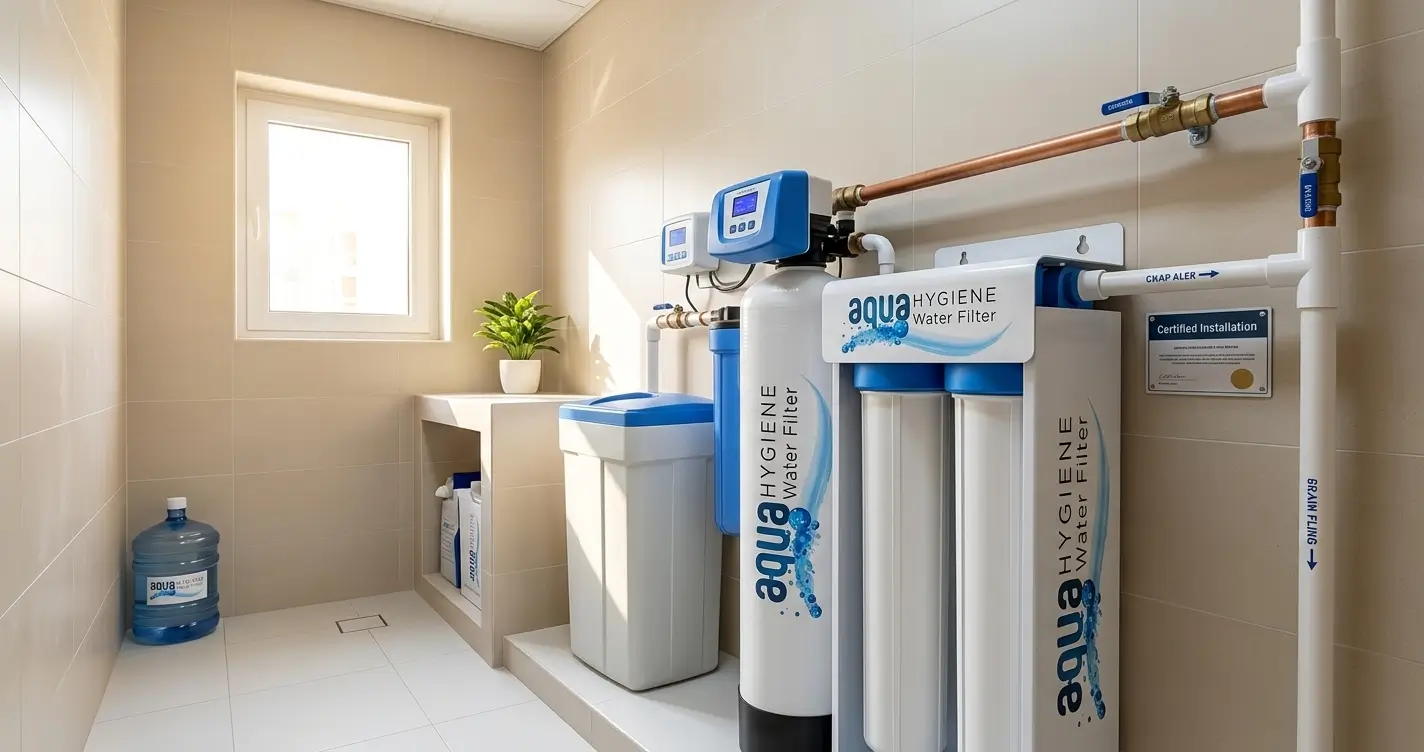
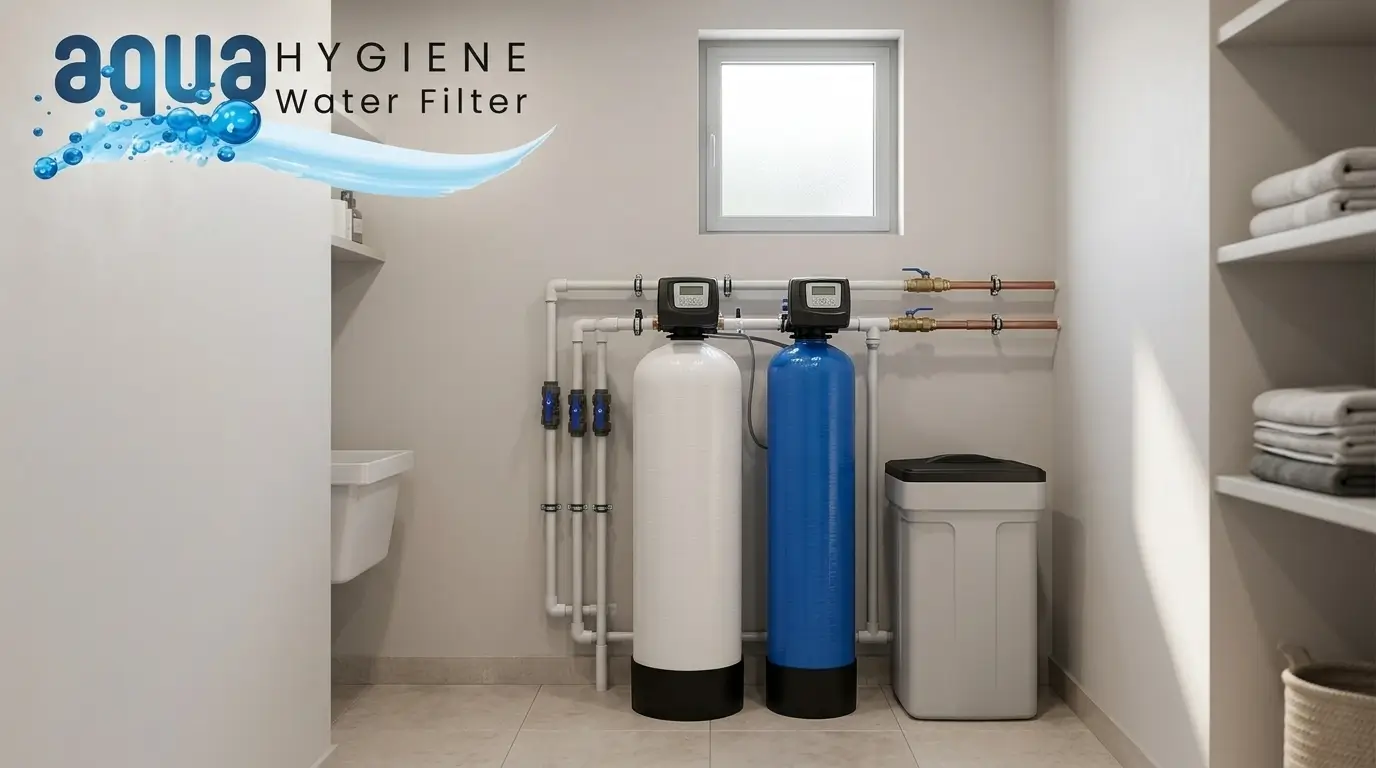
A whole house system treats water the moment it enters your home, before it reaches a single tap, shower or appliance. For well water, that might mean sediment filtration, softening and UV disinfection all working together. For city water, the focus is usually sediment, chlorine or chloramine removal instead. Either way, every outlet in the house gets the same treated water, including your washing machine, dishwasher and shower.
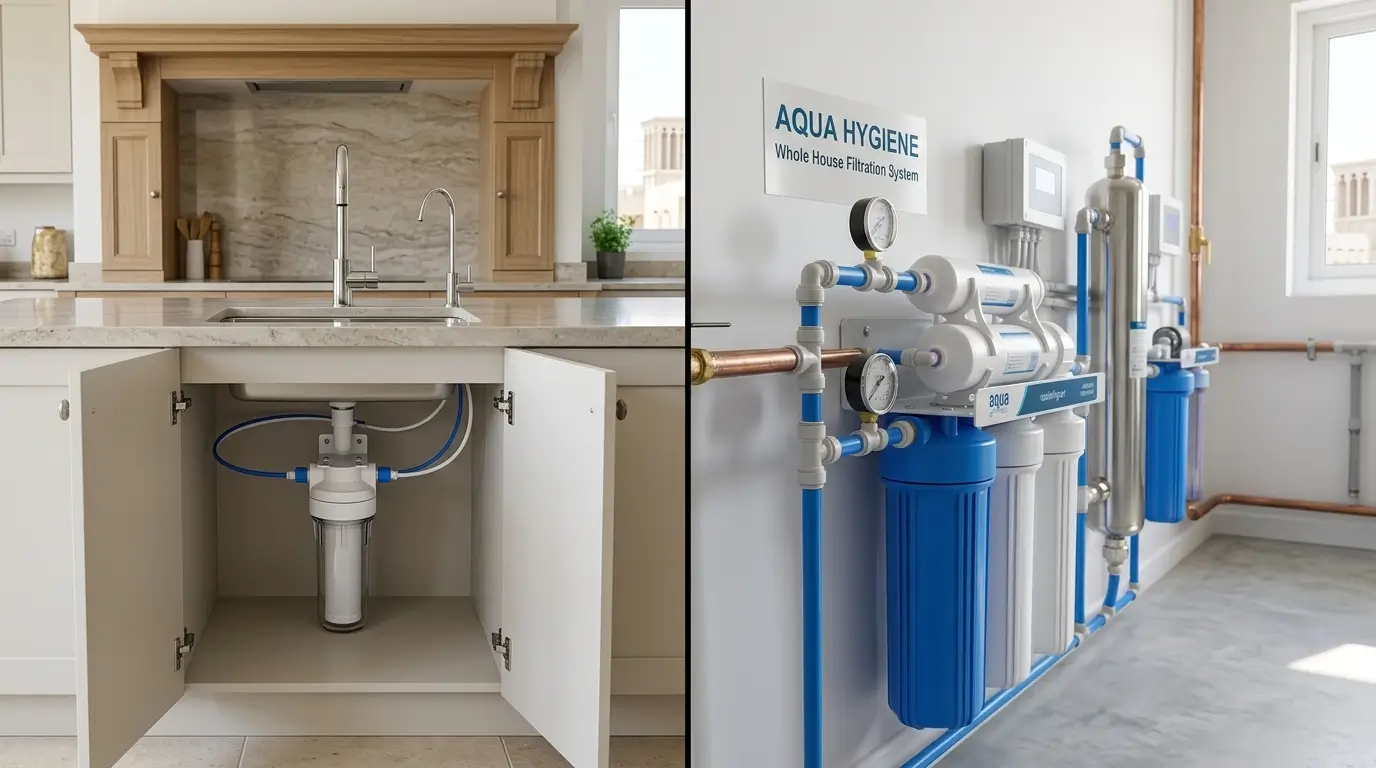
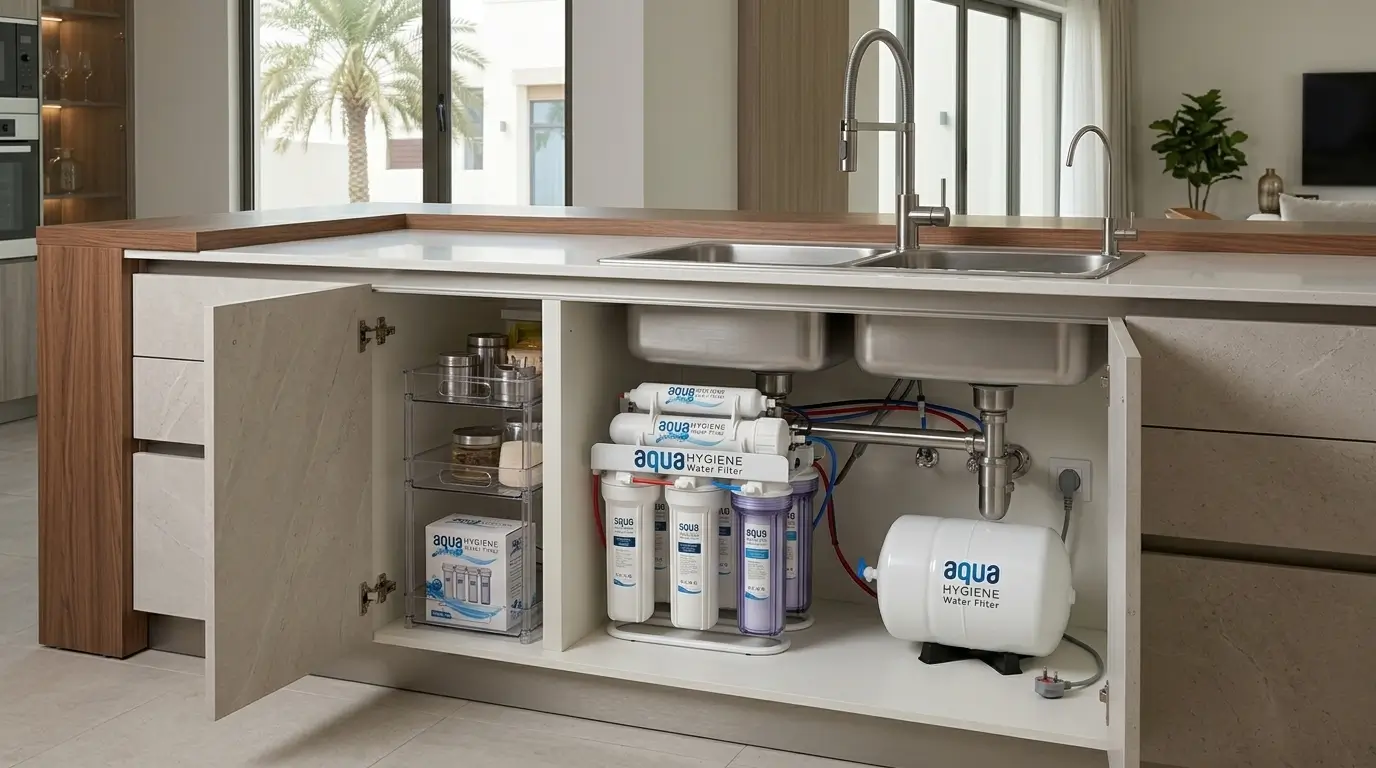
A whole house system sits at the main water line and treats everything flowing into the property, covering toilets, washing machines and showers along with your drinking taps. An under counter or point of use system works differently. It's installed at a single location, usually the kitchen sink, and only filters water used there for drinking, cooking or an ice maker. If you want consistent water quality throughout the whole home rather than just at one tap, a whole house system is the one built for that job.
What a system removes depends entirely on what's in your water to begin with. Common targets include sediment, chlorine and chloramine from city supplies, and iron, hardness minerals or hydrogen sulphide gas from well water. There's no single filter that handles everything, which is why identifying your specific water issue first matters more than picking whatever system looks the most advanced.

Filtering everything at the source means every tap in your home delivers cleaner water, not just the one you've fitted a jug filter to.
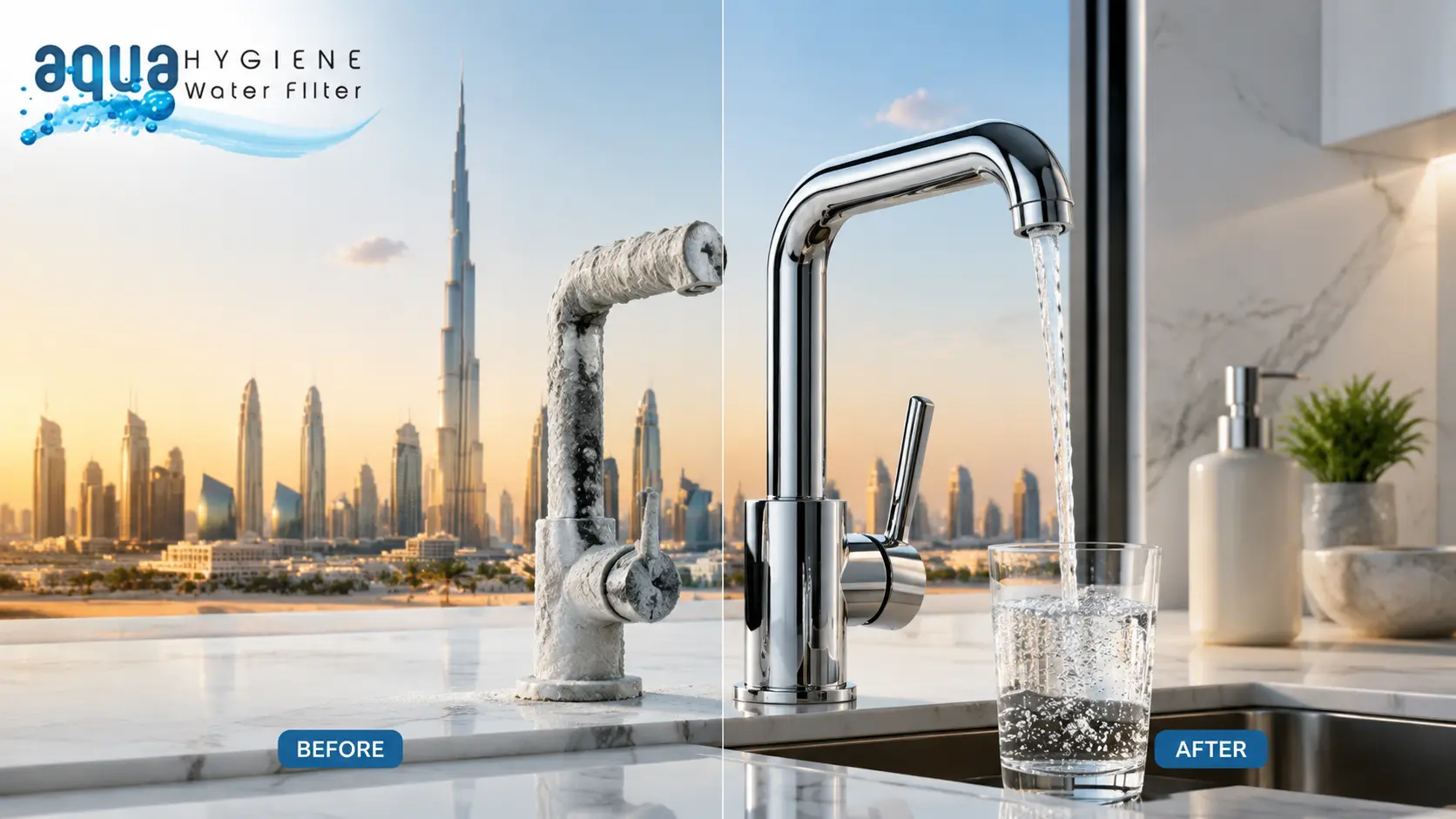
Minerals in hard water build up scale inside pipes, faucets and appliances over time. Removing them before they enter your system helps your plumbing and appliances last longer.
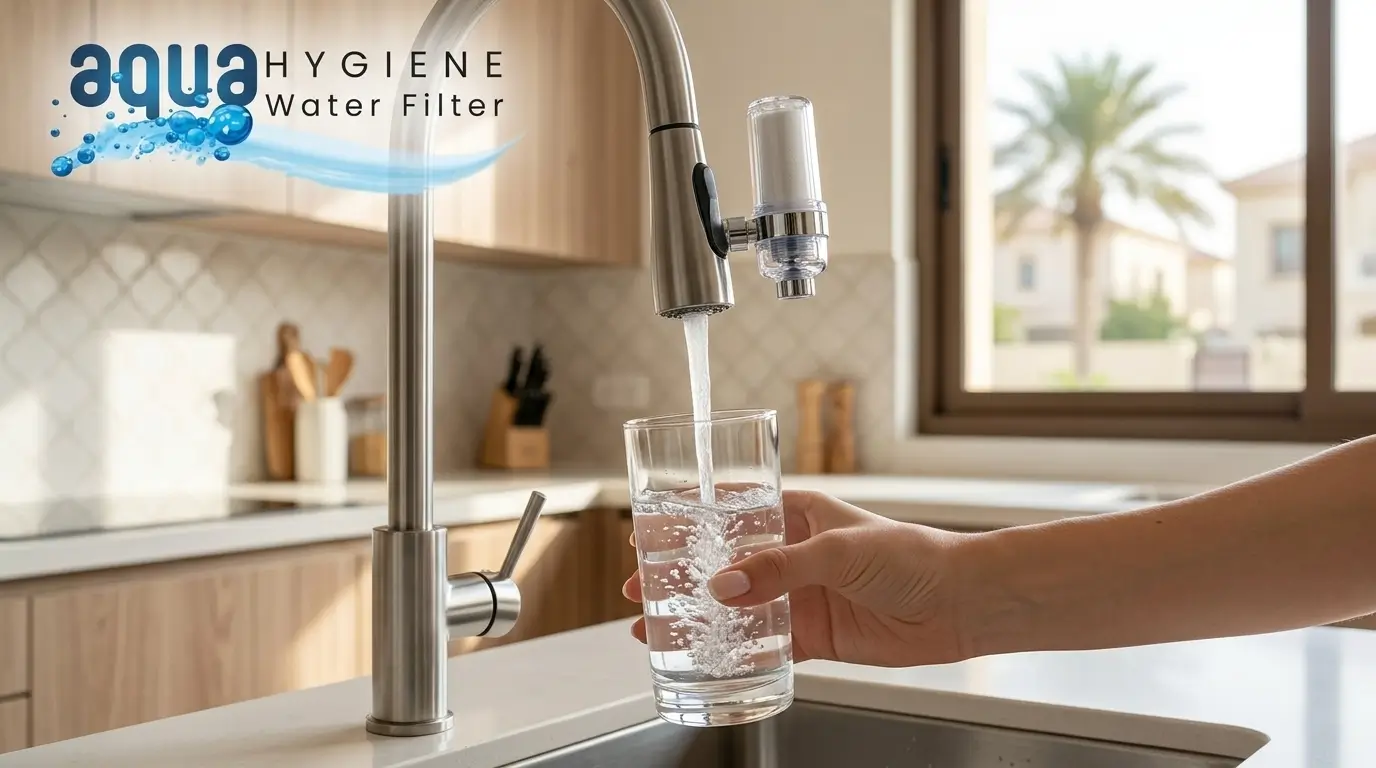
Chlorine and other disinfectants used in municipal treatment often leave water tasting or smelling slightly off. A whole house filter clears that up for drinking, cooking and even your shower.
Less scale means less strain on your appliances and fewer repairs. Many households also drop bottled water altogether once their tap water tastes the way it should, which adds up over a year.
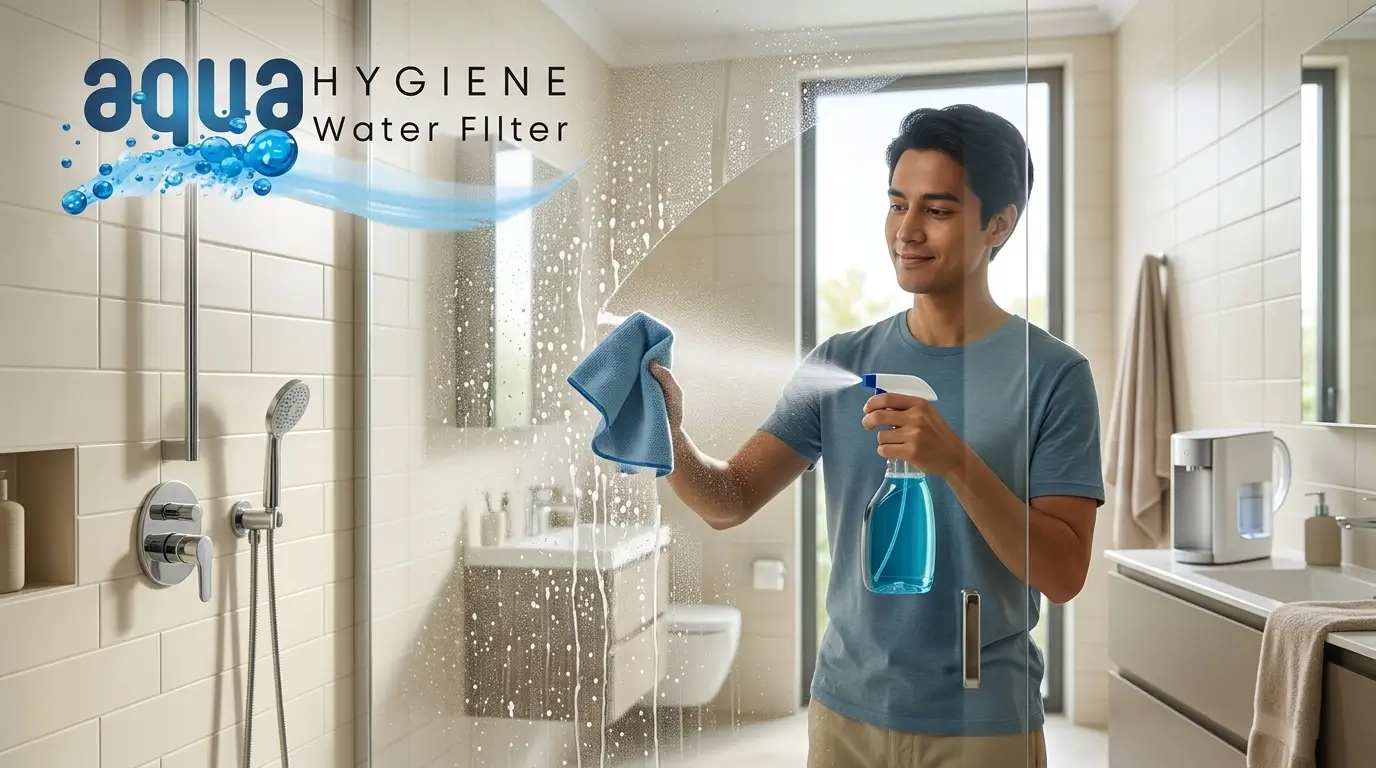
Hard water and filtered water aren't quite the same problem. Hard water specifically means high levels of calcium and magnesium, which leave scale on showerheads, glassware and pipework over time.
A traditional water softener uses ion exchange, swapping calcium and magnesium for sodium ions to stop that buildup from happening. Water conditioners take a different approach, binding those minerals so they can't stick to surfaces in the first place, without needing salt or the same level of upkeep. Which one makes sense depends on your water hardness and how much maintenance you're willing to take on.
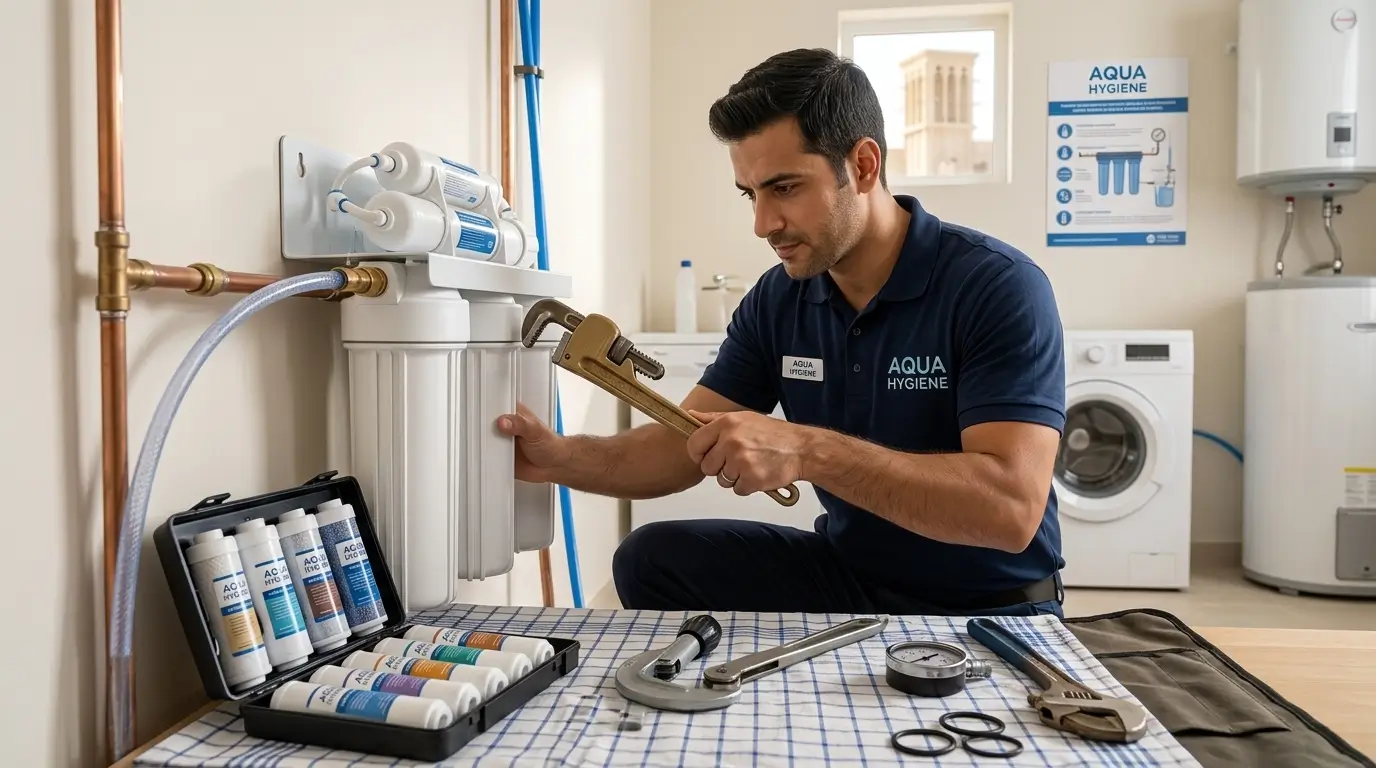
Whole house systems usually need professional installation given the plumbing involved, though the general process looks like this:
Getting a plumber or an installer familiar with these systems involved is usually worth it, particularly for the cutting and fitting stages where a mistake means a leak inside your walls.
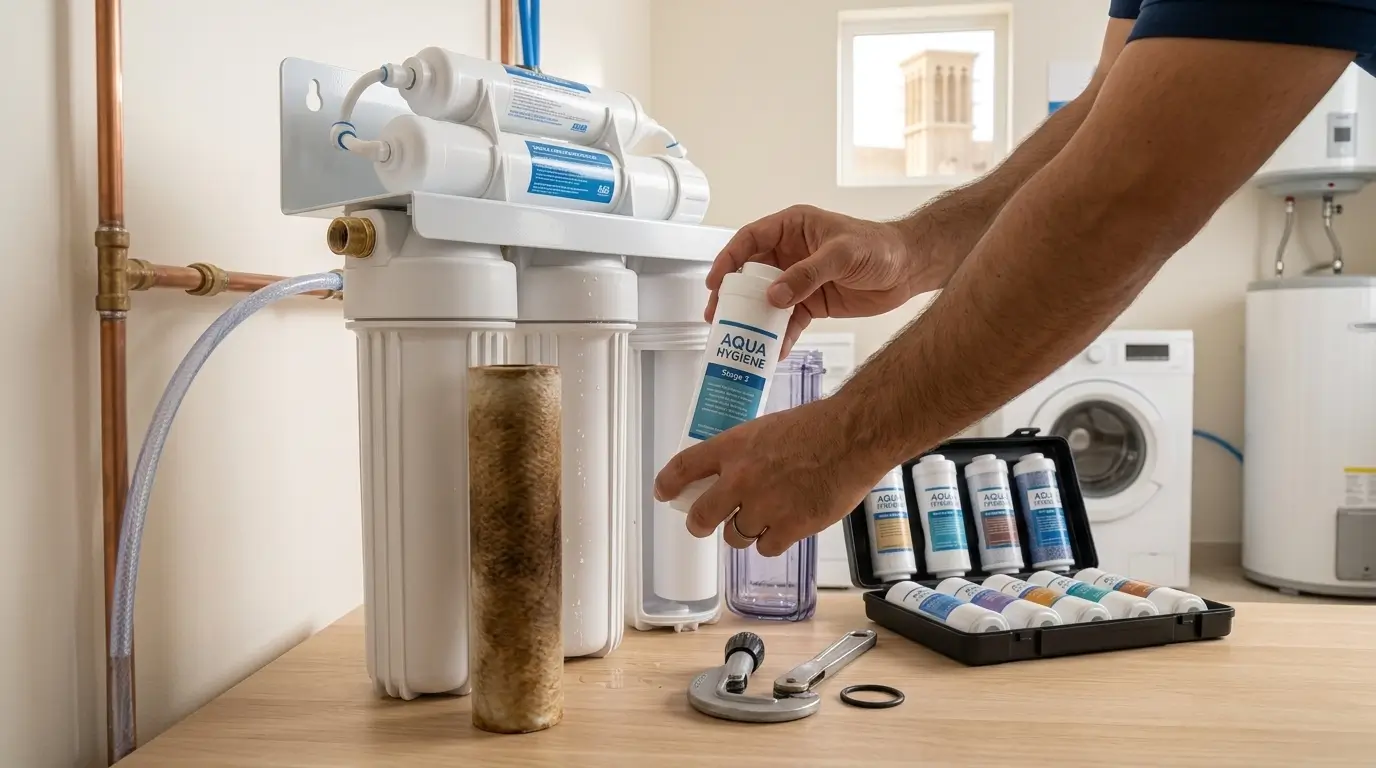
Most whole house filters rely on cartridges, commonly carbon block or activated carbon, to trap contaminants as water passes through. How long a cartridge lasts depends on the brand, the filter type and how demanding your water source is. Your provider can give you the exact replacement schedule for your specific system rather than a generic estimate.
Basic cartridge-based systems for sediment or chlorine removal tend to be the most affordable option. Softeners and backwashing systems built for iron or odour removal cost more upfront, largely because of the added equipment and complexity involved. Weighed against years of protected plumbing, fewer repairs and no more bottled water, most households find the investment pays for itself over time.
A whole house water filter isn't a small purchase, but it solves the problem at the source instead of managing it tap by tap. Better tasting water, protected plumbing, and one less thing to think about every time you turn on the shower or fill a glass. If you're not sure which system fits your home, get in touch with Aqua Hygiene and we'll help you figure it out.