Get Free Consultation!
We are ready to answer right now! Sign up for a free consultation.
I consent to the processing of personal data and agree with the user agreement and privacy policy

We are ready to answer right now! Sign up for a free consultation.
I consent to the processing of personal data and agree with the user agreement and privacy policy
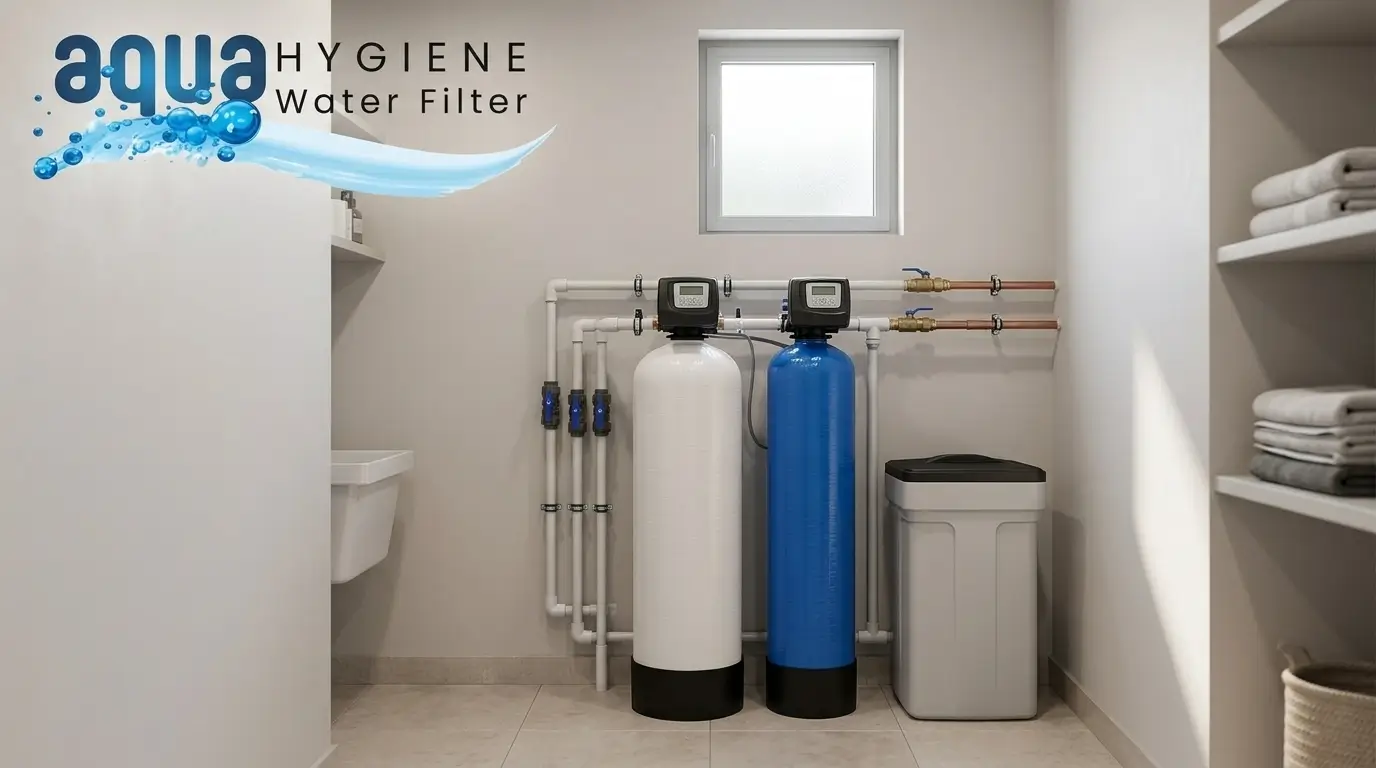
A water softener removes the minerals that make water "hard," mainly calcium and magnesium. It uses a process called ion exchange, swapping those minerals out for sodium before the water reaches your taps. If you're dealing with scale, soap scum or appliances wearing out faster than they should, a water softener is usually the fix.
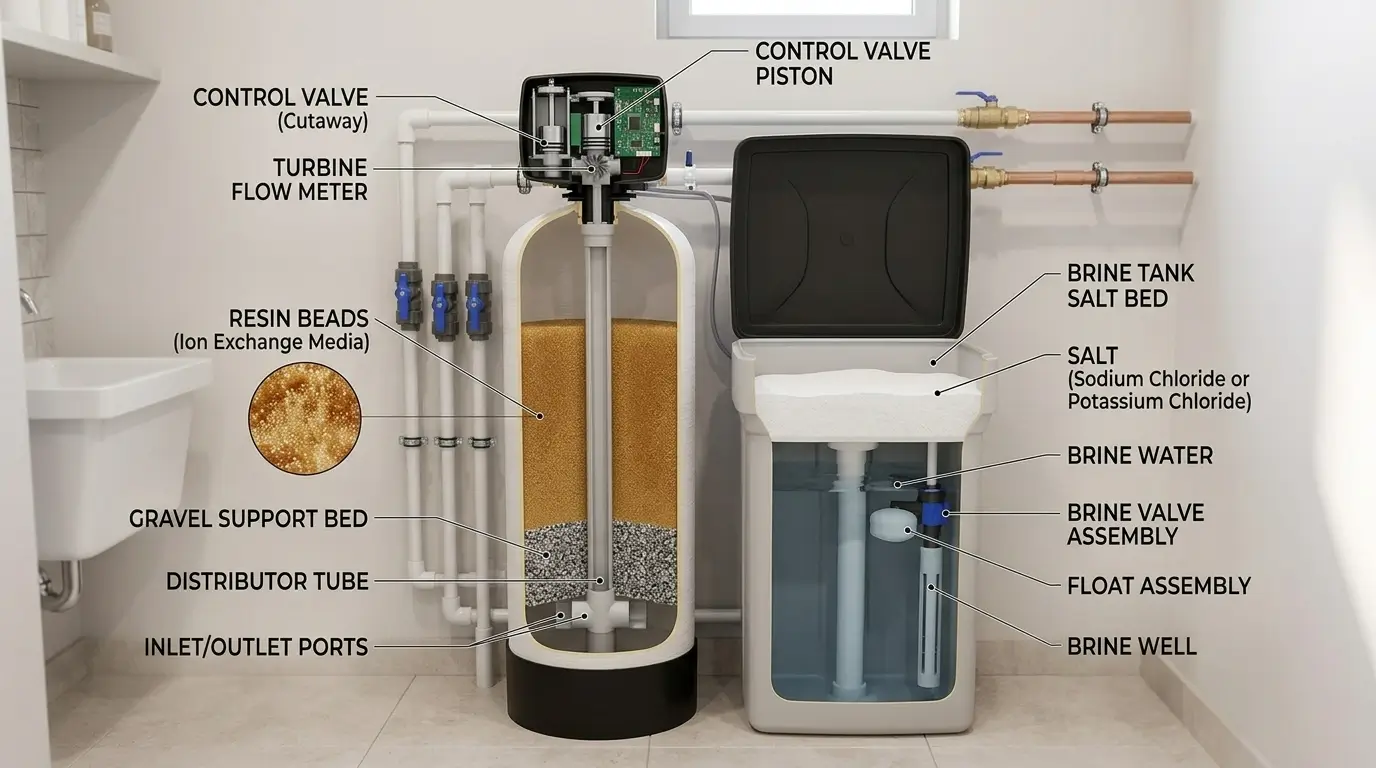
Every standard softener comes with three main parts:
This holds a bed of resin beads carrying a sodium charge. The actual softening happens here as water passes through.
This manages water flow through the system and controls when and how the resin regenerates.
This holds a salt and water solution. The system draws this brine in during regeneration to recharge the resin beads.
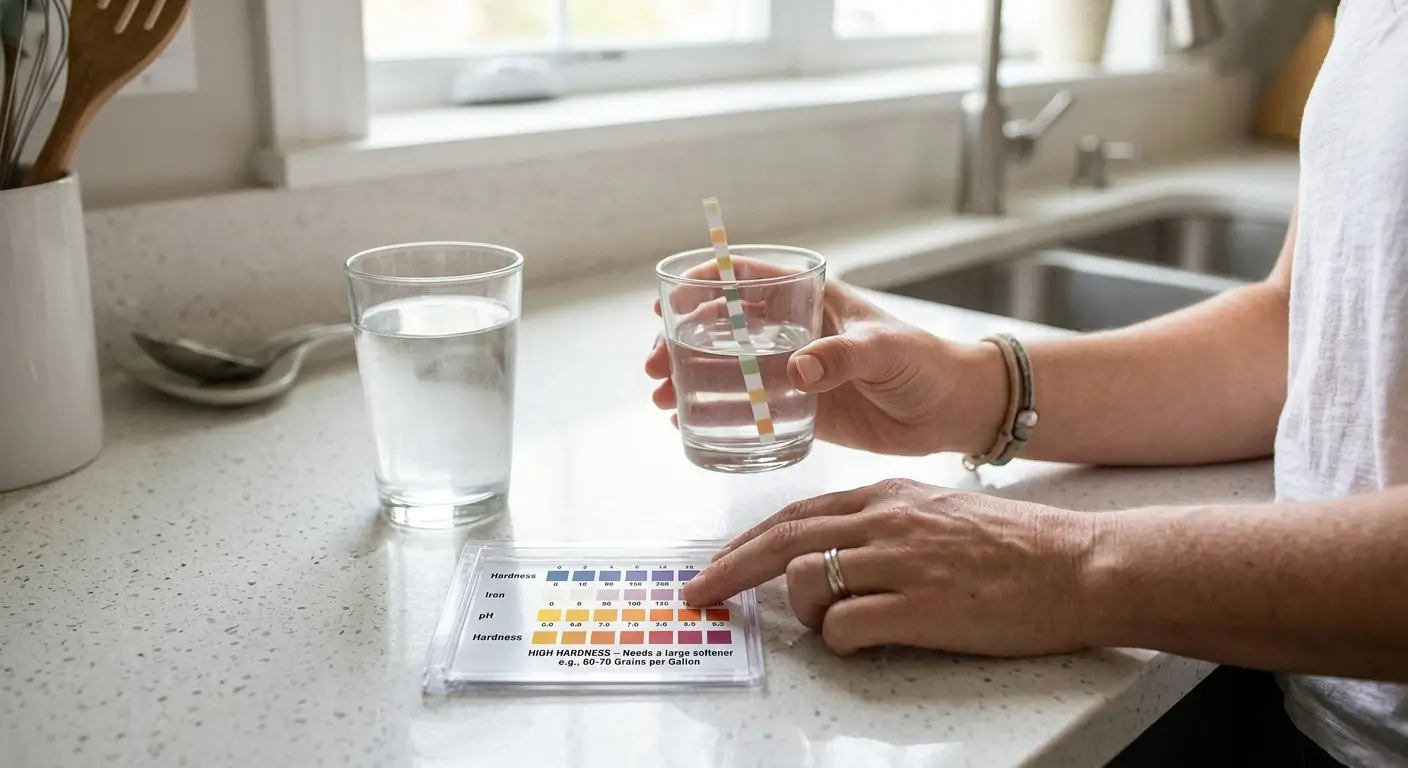
Getting the size right comes down to a few things:
Here's how the sizing math actually works. Say your water hardness comes back at 10 grains per gallon, and you've got 1 part per million of iron. This calculation weights iron more heavily, adding roughly 3 grains for every part per million. That brings your compensated hardness to 13 grains per gallon.
The average person uses around 75 gallons of water a day. A household of four is using roughly 300 gallons daily. Multiply that by your 13 grains per gallon and you get a daily softening requirement of 3,900 grains.
Most sizing guides assume a system regenerating roughly once a week. Multiply that daily figure by seven and you get the 27,300 grains you need between regenerations. Softeners also don't run at full rated capacity in practice. They're typically most efficient at around 65% of it, so divide 27,300 by 0.65 and you land on roughly 42,000 grains. In this example, that points to a system around the 45,000 grain mark.
If the maths feels like overkill, a proper water test combined with a quick chat with a specialist will get you to the same answer a lot faster.
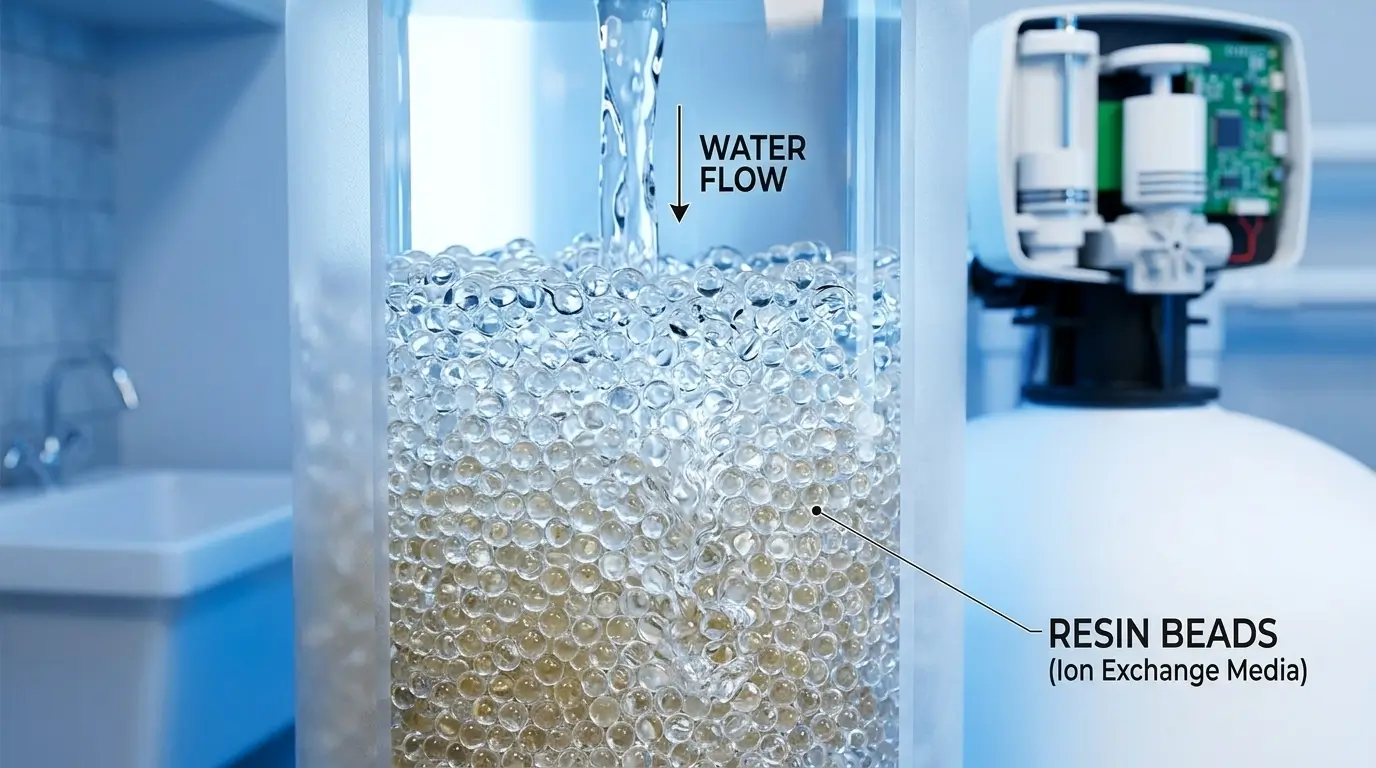
The resin beads inside the tank start out carrying a sodium charge. As raw water flows down through them, the resin pulls the calcium and magnesium out of the water and releases sodium in their place. That swap is what "softens" the water. The same process can pull dissolved iron out of the water too, provided it's in a soluble form.
Once the resin has done its job for a stretch of time, the system runs a regeneration cycle to reset itself. Soft water first fills the brine tank, dissolving the stored salt into a brine solution. Then a backwash stage runs. Water flows in through a distributor tube and physically agitates the resin bed, flushing out any trapped debris or sediment.
After that, the brine solution passes back over the resin, stripping off the calcium and magnesium that built up. This recharges the beads with fresh sodium. Some systems include an additional chlorine generation step here to help keep the resin bed clean, though this isn't standard on every model. A final rinse clears out any leftover salt, and the system goes back into service.
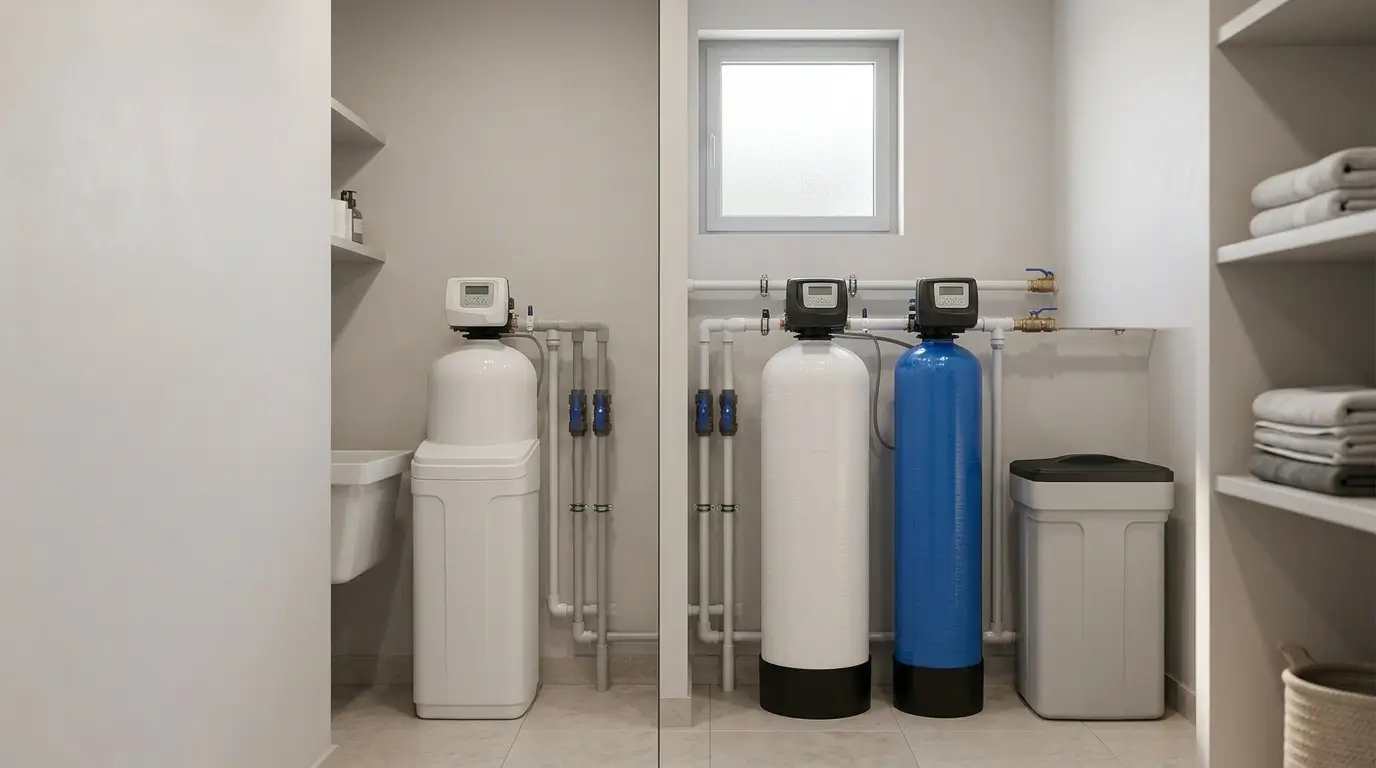
The standard ion exchange setup covered above. It's the most common and generally the most effective option for whole-home softening.
These use two resin tanks instead of one, so while one tank regenerates, the other keeps supplying soft water. Useful for larger households or higher water usage where you don't want any gap in softened water.
These clamp onto the outside of a pipe without any cutting or plumbing work, and they need a power source to run. Worth knowing upfront: the evidence that these actually soften water the way ion exchange does is mixed at best, and results tend to be inconsistent. They're a low-commitment option if you want to try something, but they're not a like-for-like replacement for a proper softener.
RO doesn't usually count as a softener in the traditional sense. It reduces hardness minerals along with a lot of other contaminants by forcing water through a fine membrane. The trade-off is cost and water waste. That's why most homes use RO systems for drinking water at one tap rather than softening the entire home's supply.
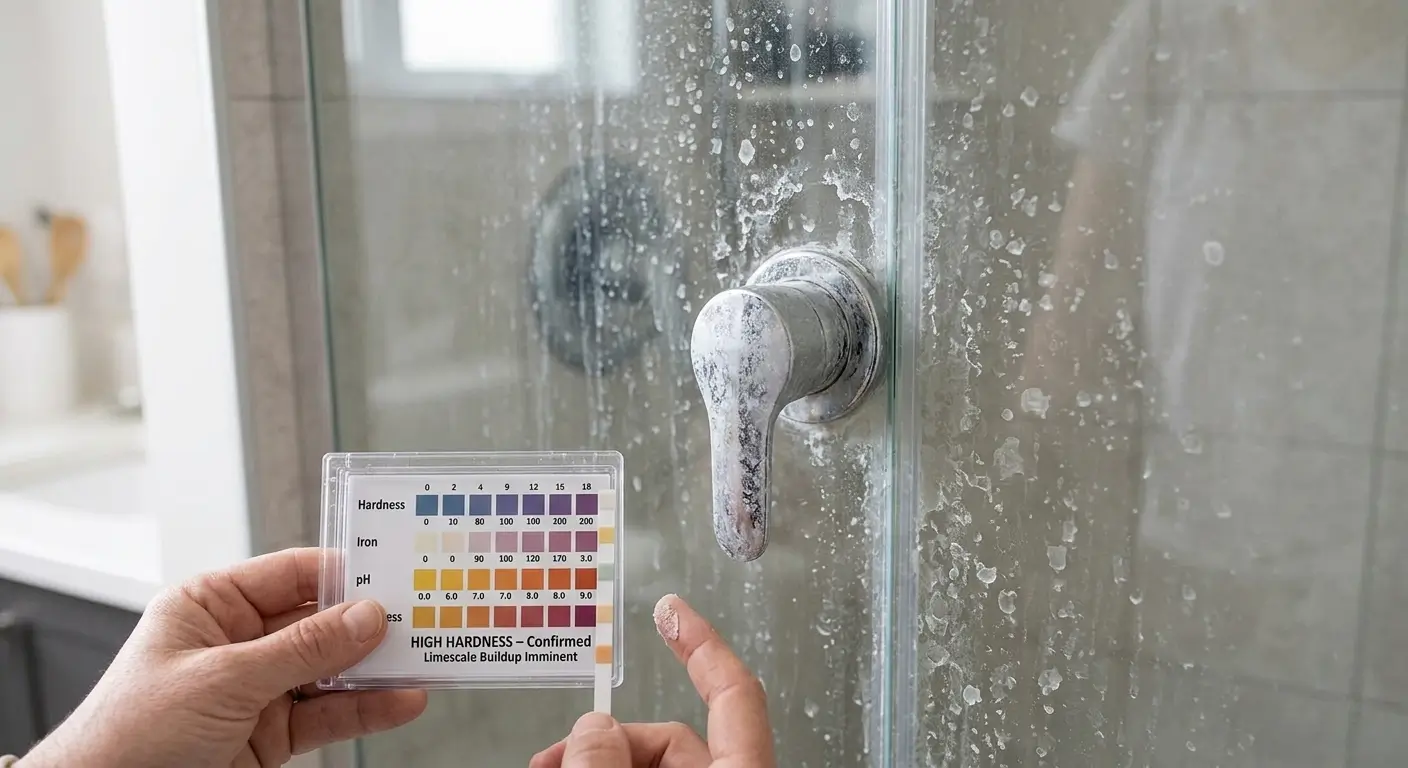
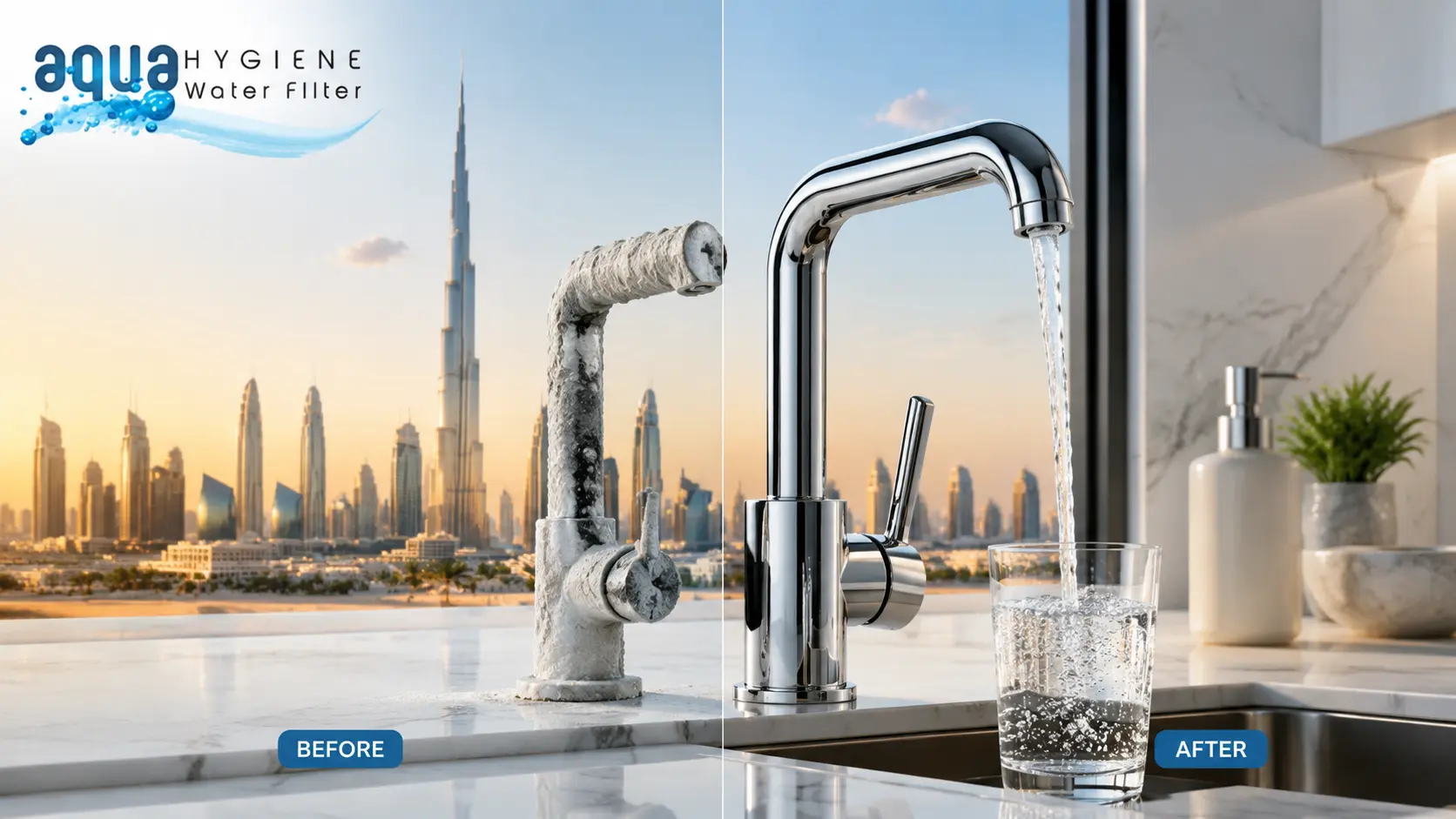
If hard water is damaging your appliances, leaving scale on fixtures, or coating your dishes and glassware in a chalky film, it's worth sorting out. Left alone, hard water gradually wears down heating elements and clogs plumbing. It also leaves soap scum that's genuinely harder to clean than it needs to be. A softener deals with all of that at the source rather than you fighting the symptoms every week.
Water softeners remove the calcium and magnesium behind most hard water problems. They use ion exchange to swap those minerals out before they ever reach your taps. Which type and size makes sense depends on your household's actual water and usage, not a one-size-fits-all answer. If you're not sure where to start, get in touch with Aqua Hygiene. We'll help you work out the right fit for your home.